The Psychology Behind Colors
I recently came across an article explaining the psychology of colors and how they affect our lives. I thought I would share with you my takeaway from reading about this subject.
How Colors Can Affect Your Mood
We often associate certain colors with different feelings or environments. Such as seeing red for anger, or as the color of a fire truck. Color psychology is the study of how different colors affect your mood.
This science is used in all kinds of industries such as interior design, marketing, fashion, and even in industrial buildings like warehouses and factories.
Industrial Color Psychology
Back during World War II, the Dupont company and a man named Faber Birren developed an industrial color-coding scheme for factories which is still used today. Birren studied how different colors affect people and came up with a color-coding chart on how the factories should be laid out. This addressed not only which colors should be used for safety and general signage, but also which colors were best for productivity and focus for the workers. For example, he determined light green was the best color to paint control panels and walls to reduce fatigue amongst the workers.
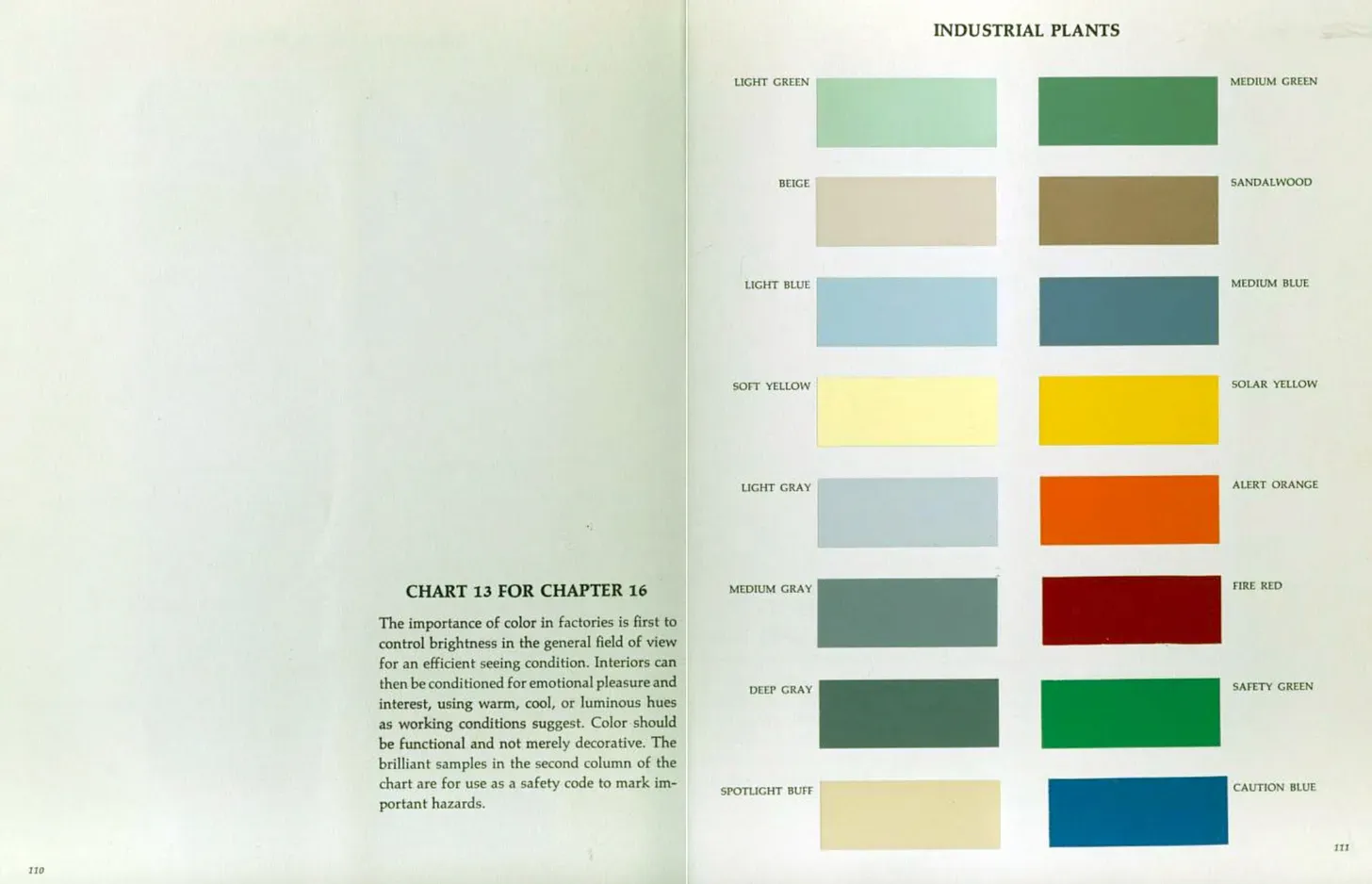
- Fire Red: All fire protection, emergency stop buttons, and flammable liquids should be red
- Solar Yellow: Signifies caution and physical hazards such as falling
- Alert Orange: Hazardous parts of machinery
- Safety Green: Indicates safety features such as first-aid equipment, emergency exits, and eyewash stations.
- Caution Blue: Non-safety information, notices, or out-of-order signage
- Light Green: Used on walls to reduce visual fatigue
If you have ever spent any time inside of a factory, this probably seems very familiar to how it was color coded.
Color Psychology in Marketing
Another major way color psychology is used is in marketing. Have you ever seen a product or advertisement and felt a certain way about it just from its appearance? There is a good chance the colors used were what you were reacting too. An example of this is the feeling that a red sports car is somehow faster than one painted white. We have been conditioned to associate that the color red should be on a fast car, because the color excites us more than others. Another example would be how blue evokes trust. Just look at some of the major finical and tech firms and take notice of how many use blue in their logos.
Red causes excitement or grabs your attention. It can be used to signify love, danger, or something exciting.
Yellow can give you a feeling of warmth and happiness. It can also cause excitement or signal caution.
Blue can give you the feeling of trustworthiness as well as relaxation. It can also signal sadness.
Green can signal health and relaxation as well as greed and jealousy.
Those are just a few examples, almost every color has a feeling associated with it.
When marketing products, they have to take into account how the colors are going to affect the reaction of the people seeing it. They also have to take into account the region they are marketing in. Different cultures have different meanings for colors.
For example, in the U.S. white is seen as purity while in other cultures it is used at funerals for mourning.
What is Color Therapy?
One of the most interesting things I read about color psychology is color therapy, also known as chromotherapy. This is a form of therapy that uses color and light to treat mental and physical conditions. It is believed that different colors are able to affect the body in different ways.
Red is used to energize a person when they are tired or feeling down.
Blue can be used to aid with depression or pain.
Green can help relieve stress and relax people.
Yellow can help improve your mood.
Orange can also help improve mood and appetite.
Color therapy can be done in a couple of different ways, such as through sight by looking at a color. It can also be done by exposing certain body parts to the color, people believe that color can be absorbed through the skin as well.
While it's a fun and interesting concept, color therapy is considered a pseudoscience and there is no significant evidence that it effectively treats any conditions. But I guess if you like it, what can it hurt to look at some colors if it makes you feel better.
Conclusion
I never sat down and thought about how the colors around me affect my mood and decisions. Next time you are in a store, take note of the different colors of the products and how each one makes you feel. Think about why you are choosing one brand over another and decide if the color choices they used on the packaging is what swayed your choice. I think it happens more often than we realize. You could also take a look around your home and work and see what colors are being used. You might find that changing those colors to something more compatible with the mood you are looking for will make a huge difference in your life.
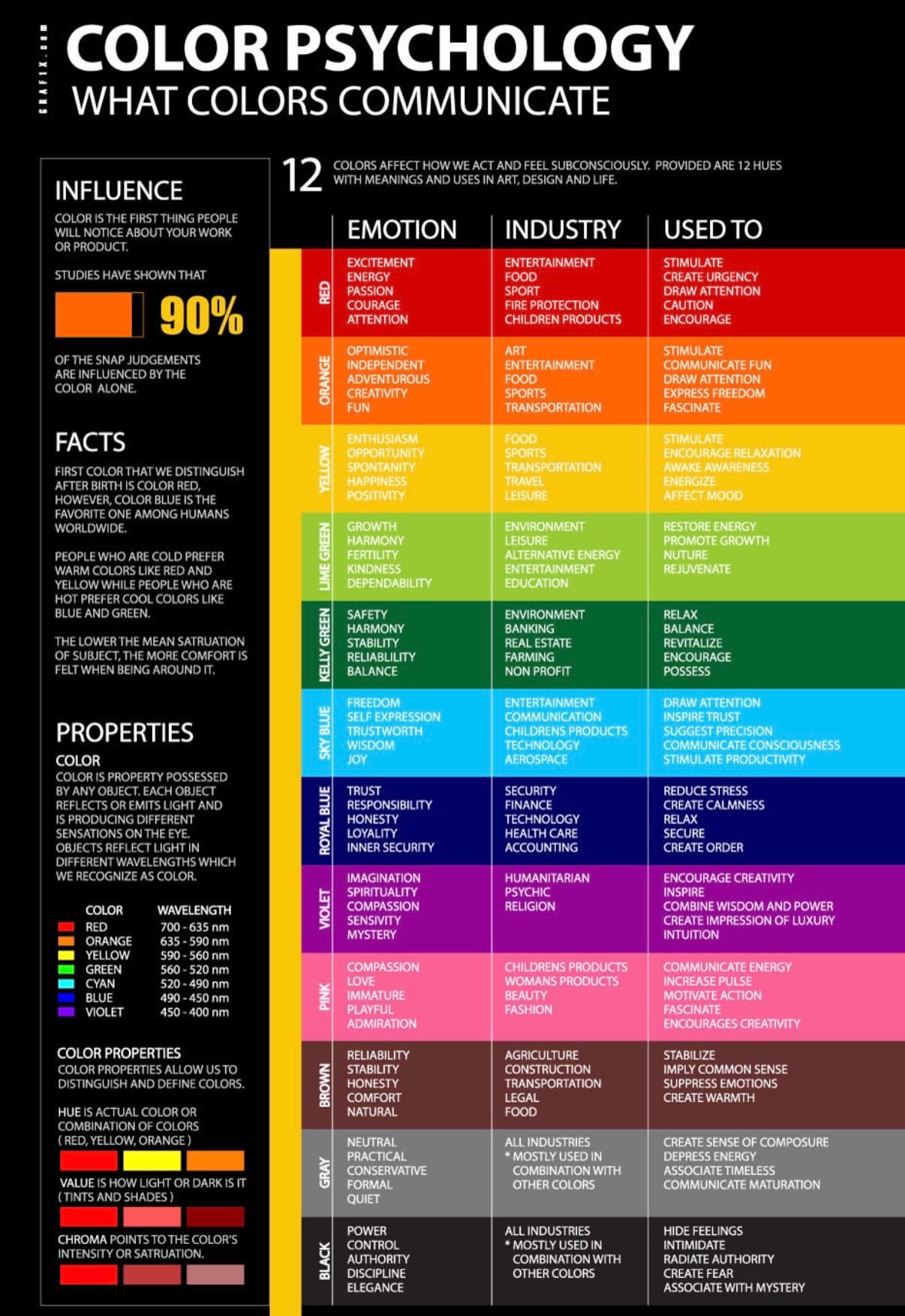
Here is an interesting chart you can use to compare different uses of colors.




Member discussion